Flexural Testing Machine – Concrete Beam Flexural Strength Testing Equipment
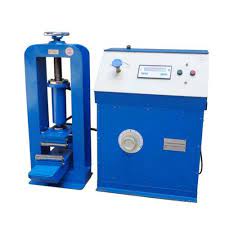
Flexural Testing Machine
The Flexural Testing Machine is an important testing instrument used to determine the flexural strength or modulus of rupture of concrete and other construction materials. The machine applies a controlled bending load to a test specimen until failure, allowing the laboratory to measure the material's resistance to flexural loading.
Flexural strength is an important property for materials subjected to bending or transverse loading. In concrete testing, flexural strength is commonly determined using standard beam specimens and a prescribed loading arrangement.
ARCL Instruments Pvt. Ltd. manufactures and supplies Flexural Testing Machines for civil engineering laboratories, construction companies, ready-mix concrete plants, infrastructure projects, research laboratories, quality-control departments and educational institutions.
What Is a Flexural Testing Machine?
A Flexural Testing Machine is a laboratory testing machine designed to apply a controlled bending load to a specimen.
For concrete testing, a beam specimen is supported at specified locations and loaded until failure. The maximum applied load is recorded and used to calculate the flexural strength according to the applicable test method.
Depending on the machine configuration, flexural testing can be performed using:
- Third-point loading
- Centre-point loading
- Other specified loading arrangements
The loading arrangement, specimen dimensions, support span, loading rate and calculation method must follow the relevant standard.
ASTM C78/C78M specifies a test method for determining the flexural strength of concrete using simple beam specimens with third-point loading.
Principle of Flexural Strength Testing
The principle of the flexural test is based on applying a controlled transverse load to a supported beam specimen.
During the test:
- The specimen is placed on the machine's support rollers.
- The loading arrangement is positioned according to the applicable standard.
- The machine applies load at the prescribed rate.
- Load is continuously increased until the specimen fails.
- The maximum load is recorded.
- Flexural strength is calculated using the appropriate equation.
The result is commonly reported as flexural strength, flexural tensile strength, or modulus of rupture, depending on the applicable test standard.
Flexural Strength of Concrete
Concrete is generally strong in compression but has comparatively lower tensile resistance. Flexural strength testing provides information about the behavior of concrete under bending.
The flexural strength value can be relevant for applications such as:
- Concrete pavements
- Rigid roads
- Airport pavements
- Industrial floors
- Precast concrete
- Structural concrete
- Kerbs and paving products
- Concrete beams
- Quality-control testing
The significance of the result depends on the material, specimen geometry, loading method and applicable specification.
Main Components of Flexural Testing Machine
A typical Concrete Flexural Testing Machine includes the following components:
1. Loading Frame
The rigid loading frame provides structural support for applying the test load.
2. Hydraulic Loading System
Hydraulic systems are commonly used to generate and control the required test force.
3. Pumping Unit
The pumping system generates hydraulic pressure and transfers it to the loading piston.
4. Load Measurement System
A load cell, proving ring or other force-measuring system measures the applied load.
5. Loading Assembly
The loading assembly applies the force to the specimen according to the selected testing configuration.
6. Support Rollers
Support rollers hold the concrete beam at the required span and allow the specified loading arrangement.
7. Control Panel
The control system allows the operator to operate and monitor the testing machine.
8. Digital Display
Depending on the model, the machine may display the applied load digitally.
9. Safety Features
Suitable guarding and operational controls help provide safe testing conditions.
The exact construction, capacity and control system vary depending on the machine model.
Key Features of ARCL Flexural Testing Machine
A laboratory-quality flexural testing machine can provide:
- Robust construction
- High-strength loading frame
- Controlled hydraulic loading
- Accurate load measurement
- Suitable beam support arrangement
- Replaceable loading and support rollers
- Digital load indication
- Smooth loading operation
- Emergency stop/safety provisions where applicable
- Easy specimen positioning
- Suitable capacity for laboratory requirements
- Calibration and verification support
ARCL Instruments can configure testing equipment according to the laboratory's required capacity and applicable test method.
Flexural Testing Machine Working
The general operating process is straightforward.
Step 1: Prepare the Specimen
Prepare and cure the concrete beam or other test specimen according to the applicable standard.
Step 2: Measure the Specimen
Measure the relevant dimensions of the specimen before testing.
Step 3: Position the Beam
Place the beam on the support rollers of the flexural testing machine.
Step 4: Install the Loading Arrangement
Position the loading nose or loading rollers according to the selected test method.
Step 5: Apply the Load
Apply load continuously at the rate specified by the applicable standard.
Step 6: Record Maximum Load
Continue loading until the specified failure condition is reached and record the maximum load.
Step 7: Calculate Flexural Strength
Calculate flexural strength using the appropriate equation and specimen dimensions.
The exact procedure and calculation depend on the applicable standard and loading configuration.
Flexural Testing Machine for Concrete
The Concrete Flexural Testing Machine is widely used for testing concrete beams.
Concrete beam specimens are commonly tested to determine their resistance to bending. The result can be used for quality control, research, concrete mix evaluation and pavement-related applications.
ASTM C78/C78M covers the determination of flexural strength of concrete using simple beams with third-point loading.
For Indian laboratories, the applicable IS 516 test method should be followed for the relevant concrete flexural-strength test.
Flexural Strength Test of Concrete
The flexural strength test involves loading a concrete beam until failure.
Depending on the selected test method, the flexural strength can be calculated from:
Maximum applied load
Specimen dimensions
Support span
Loading configuration
Location of fracture
For this reason, the correct loading arrangement is important. A machine intended for one loading configuration should not automatically be assumed to comply with another test method.
Applications of Flexural Testing Machine
The Flexural Testing Machine is used in a wide range of industries and laboratories.
Civil Engineering Laboratories
Used for testing concrete beams and construction materials.
Highway Laboratories
Used for concrete pavement and road-material testing.
Ready-Mix Concrete Plants
Used for quality-control testing of concrete batches.
Precast Concrete Industry
Used to evaluate flexural properties of precast products and materials.
Research Laboratories
Used for development and comparison of new concrete mixes and construction materials.
Educational Institutions
Used for practical laboratory testing in civil engineering courses.
Infrastructure Projects
Used for quality-control and verification testing on major construction projects.
Flexural Testing Machine for Highway and Pavement Testing
Concrete pavement is subjected to repeated wheel loads and bending stresses. Consequently, flexural strength is an important property in many pavement-related concrete applications.
A flexural testing machine allows laboratories to determine the bending strength of concrete specimens under controlled conditions.
Testing may be used for:
Rigid pavement concrete
Airport pavement concrete
Industrial floors
Highway concrete
Pavement-quality concrete
Precast pavement products
The applicable project specification should determine the required specimen, test method and acceptance criteria.
Flexural Testing Machine Manufacturer in India
ARCL Instruments Pvt. Ltd. manufactures and supplies civil engineering and material testing equipment for construction and infrastructure laboratories.
For customers looking for a Flexural Testing Machine Manufacturer in India, important factors to consider include:
Machine capacity
Applicable test standard
Loading configuration
Hydraulic system
Load measurement accuracy
Beam dimensions
Support span
Loading rollers
Digital display
Calibration requirements
Power supply
Safety features
Spare parts and service support
Selecting the correct machine configuration helps ensure that the equipment is appropriate for the intended test method.
Flexural Testing Machine Capacity
Flexural testing machines are available in different capacities depending on the material and application.
The appropriate capacity should be selected based on:
Expected specimen strength
Specimen dimensions
Required loading range
Applicable test method
Laboratory testing volume
Future testing requirements
For example, a laboratory testing normal concrete beams may require a different capacity than a facility testing high-strength concrete or specialized construction materials.
ARCL Instruments can provide suitable machine configurations based on the customer's testing requirements.
Flexural Testing Machine for NABL Laboratories
Laboratories operating under NABL accreditation should establish suitable procedures for equipment calibration, verification, maintenance and traceability.
For a flexural testing machine, important quality-control considerations may include:
Load calibration
Load-indication verification
Loading-rate verification
Support and loading-head inspection
Machine alignment
Preventive maintenance
Equipment identification
Calibration records
Intermediate checks where required
The force-measuring system should be calibrated with suitable traceability according to the laboratory's quality system and applicable requirements.
The laboratory should also verify that the complete machine configuration is suitable for the test method included in its scope.
Calibration of Flexural Testing Machine
Calibration is important for ensuring reliable force measurements.
A calibration program may include verification of:
Applied load
Load-indicating system
Load cell or proving ring
Hydraulic pressure system where relevant
Displacement measurement where applicable
Calibration should be performed using appropriate reference standards and documented according to the laboratory's quality procedures.
For accredited laboratories, calibration intervals should be established based on applicable requirements, equipment history, usage and risk.
How to Choose a Flexural Testing Machine
Before purchasing a flexural testing machine, laboratories should consider the following:
Test Standard
Identify the exact standard and test method that will be used.
Machine Capacity
Select a capacity suitable for the maximum expected test load.
Loading Configuration
Confirm whether the laboratory requires third-point loading, centre-point loading or another arrangement.
Specimen Dimensions
Ensure that the support span and loading fixtures accommodate the required specimen size.
Force Measurement
Check the load cell/proving-ring capacity, accuracy and calibration requirements.
Hydraulic System
For hydraulic machines, consider pump performance, control and maintenance requirements.
Digital Display
A digital display can simplify monitoring and recording of test loads.
Service and Calibration
Consider availability of calibration, maintenance and technical support.
Flexural Testing Machine Price
The Flexural Testing Machine price in India depends on:
Machine capacity
Hydraulic system
Load cell/proving ring
Digital display
Loading arrangement
Automation
Data acquisition
Accessories
Calibration requirements
Customization
For an accurate quotation, laboratories should specify the required capacity, test standard, specimen dimensions and preferred measurement system.
Contact ARCL Instruments Pvt. Ltd. for the latest Flexural Testing Machine price, technical specifications and quotation.
Why Choose ARCL Instruments Pvt. Ltd.?
ARCL Instruments Pvt. Ltd. provides laboratory testing equipment for civil engineering and construction-material applications.
Its product range includes equipment for:
Concrete testing
Cement testing
Aggregate testing
Soil testing
Bitumen testing
Highway-material testing
Construction-material testing
For laboratories searching for a Flexural Testing Machine Manufacturer in India, ARCL Instruments can provide equipment solutions based on the required testing application and machine capacity.
Frequently Asked Questions
What is a Flexural Testing Machine?
A Flexural Testing Machine is used to determine the resistance of a material specimen to bending or flexural loading. For concrete, it is commonly used to determine flexural strength of beam specimens.
What is flexural strength?
Flexural strength is the resistance of a material to failure under bending. For concrete, it is often reported as the modulus of rupture.
What is a concrete flexural testing machine used for?
It is used to test concrete beam specimens and determine their flexural strength according to the applicable test method.
Which standard is used for concrete flexural strength?
In India, the applicable IS 516 method should be followed. Internationally, ASTM C78/C78M is used for determining flexural strength of concrete using simple beams with third-point loading.
What is third-point loading?
Third-point loading applies the test load through two loading points positioned along the beam span according to the applicable standard.
What is the difference between flexural strength and compressive strength?
Compressive strength measures resistance to compression, while flexural strength measures resistance to bending.
Is calibration required for a Flexural Testing Machine?
The force-measuring system should be calibrated and the machine should be verified according to the laboratory's quality system and applicable testing requirements.
Conclusion
The Flexural Testing Machine is an essential piece of equipment for determining the flexural strength of concrete and other construction materials. It is widely used in civil engineering laboratories, highway laboratories, ready-mix concrete plants, infrastructure projects, research facilities and educational institutions.
A suitable machine should provide controlled loading, accurate force measurement, appropriate loading fixtures and compatibility with the required test standard.
ARCL Instruments Pvt. Ltd. manufactures and supplies Flexural Testing Machines and civil engineering laboratory equipment for concrete, construction-material and infrastructure testing applications.
For Flexural Testing Machine, Concrete Flexural Testing Machine, Flexural Strength Testing Equipment and Civil Engineering Laboratory Equipment in India, contact ARCL Instruments Pvt. Ltd. for technical specifications, capacity options, calibration requirements and quotation.